Stop Over-Explaining, Start Showing: Few-Shot Prompting

Apparently I’ve been using few-shot prompting this whole time and didn’t even realize it. If you haven’t heard of it, or you’ve been using it without knowing, here’s a quick breakdown.
By now you’ve probably heard about Microsoft’s prompting framework: Goal + Context + Sources + Expectations. This is the same framework I teach in my training sessions, and it’s a great starting point when you’re not sure where to begin. Over time, though, you start to develop your own prompting style, the patterns that consistently give you the results you want. Prompt chaining is another approach that works really well, but I’ll save that for another day. Today is all about few-shot prompting.
What is few-shot prompting?
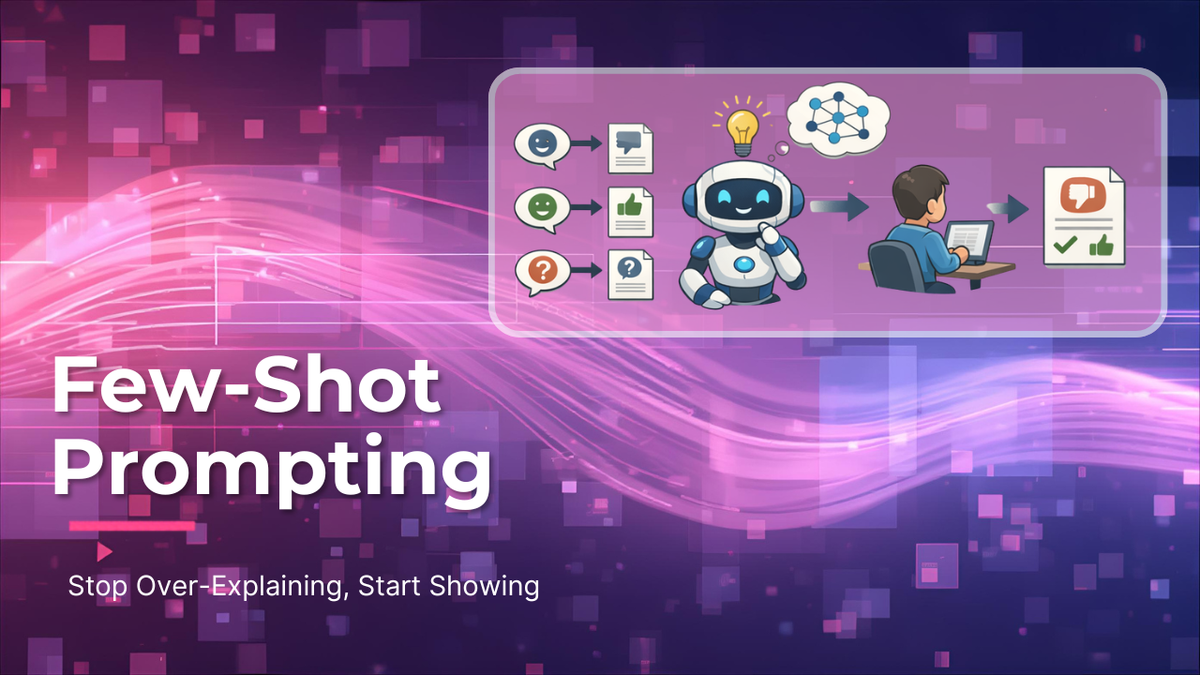
Few-shot prompting is when you give AI examples of your desired output before asking it to complete the task.
When you provide examples, the AI can pick up on patterns and use those patterns to guide its response. That includes things like format, tone, structure, and overall style.
This means you don’t have to write long explanations about what you want. Instead, you can provide a sample, and the AI learns from it in the moment. When you submit your actual request, it applies what it learned from those examples to your task.
When is it useful?
Few-shot prompting is especially helpful when you need:
- Consistent format
- Specific tone or style
- Custom categories or logic
- Higher accuracy for more complex tasks
Best times to use it
Let’s say you need AI to generate a five-page document with a very specific tone, structure, and format. You can provide a sample output, even if it is just a template, and ask the AI to review it. That helps the AI understand what you expect before you submit your request.
Other practical use cases include:
- Writing executive summaries in a consistent format
- Categorizing project updates
- Generating structured reports
- Matching your organization’s communication style
A few things to watch out for
- Keep it to 2 to 3 examples, more is not always better
- Make sure your examples are consistent with each other
- Call out that the examples are for reference only and should not be reused directly
Few-shot prompting is one of those small shifts that can make a big difference. Instead of trying to perfectly explain what you want, you show a few clear examples. The result is faster, cleaner, and more consistent outputs. If you’ve been going back and forth with AI trying to get it just right, this approach can save you time right away.
Thank you for reading!
-The Autonomous Edge